13 January 2026
In 2024, the AEDRTC awarded seven translation scholarships supporting promising PhD candidates whose work focuses on real-world impact, service improvement, and genuine co-production with people who have lived or living experience.
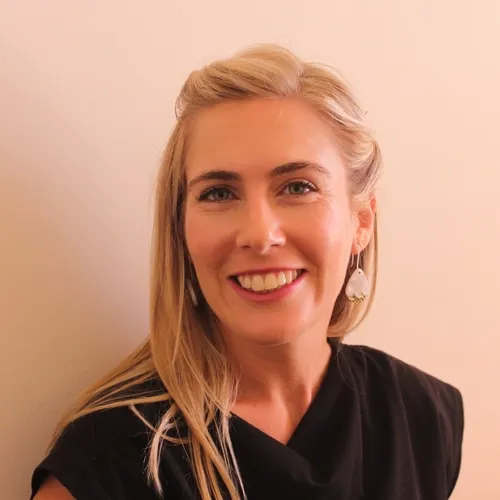
We caught up with Claire Finkelstein from Swinburne University of Technology to find out how her project “Psilocybin-assisted psychotherapy for body image disturbance - an embodied solution to an embodied problem” will investigate the potential of psilocybin-assisted therapy as a novel treatment for women with a history of anorexia nervosa who experience persistent body image disturbance.
“As a clinical psychologist who has worked in the area of eating disorders and body image concerns for more than a decade, I have witnessed how hard it is to shift body image distress.”
“Current treatments often focus on cognitive and behavioural interventions, but body image disturbance is multidimensional - it is also an emotional, perceptual, somatic and deeply embodied experience. We are exploring whether psilocybin-assisted therapy can work with the multidimensions of body image disturbance.”
Claire was drawn to applying for the TranslatED Scholarship by its potential to combine academic and practical applications.
“The TranslatED Scholarship's emphasis on bridging the gap between academic knowledge and practical application really resonated with my drive to do this project - to offer the people I am working with more options and hope in their efforts to develop a better relationship with their body.”
People with lived experience of an eating disorder have and will continue to play an important role in the development of the project.
“Our project benefited greatly from lived experience consultation in the development of the project protocol, and co-development of the therapy manual. Having diverse lived experience voices challenged, expanded and evolved the project in ways that were incredibly important.”
“Now, the experiences of participants are being quantitatively and qualitatively collected to ensure that the research continues to improve with lived experience wisdom underpinning its progress.”
Claire hopes that her project will lead to better treatment options that focus on symptom reduction.
“We know that, historically, there hasn't been enough funding or research into eating disorders and there aren't enough treatment options. I really hope that my research can make a small contribution to broadening and deepening the treatments that are available for eating disorders.”
“We need treatments that focus on symptom reduction, and we need modalities that focus on fostering a healthy connection with your identity beyond the eating disorder. It’s early stages and I do believe we need much more research to understand how this tool can be safely and effectively utilised, but the more tools we have, the better."
The next stage of Claire’s research will focus on continued research into psychedelic therapies.
“Psychedelic-assisted therapy for eating disorders is in the earliest stages of research. I'm committed to engaging in rigorous and open-minded research that continues to explore when and how this modality might be safely used as a future treatment alongside existing treatments that focus on symptom stabilisation and reduction. Alongside that, I'll always work clinically - that's the beating heart of it all for me.”
Claire’s advice to future research students to balance research with its practical applications and to acknowledge the value of learning from people with lived experience.
“The relationship between academic research and practical application is symbiotic and energising. Each part provides meaning and purpose to the other. If you're interested in working in the translational space, I believe developing opportunities to work alongside and learn from people with lived experience is vital.”
Read more about Claire's research https://www.eatingdisordersresearch.org.au/ignited-recipients/claire-finkelstein