20 May 2026
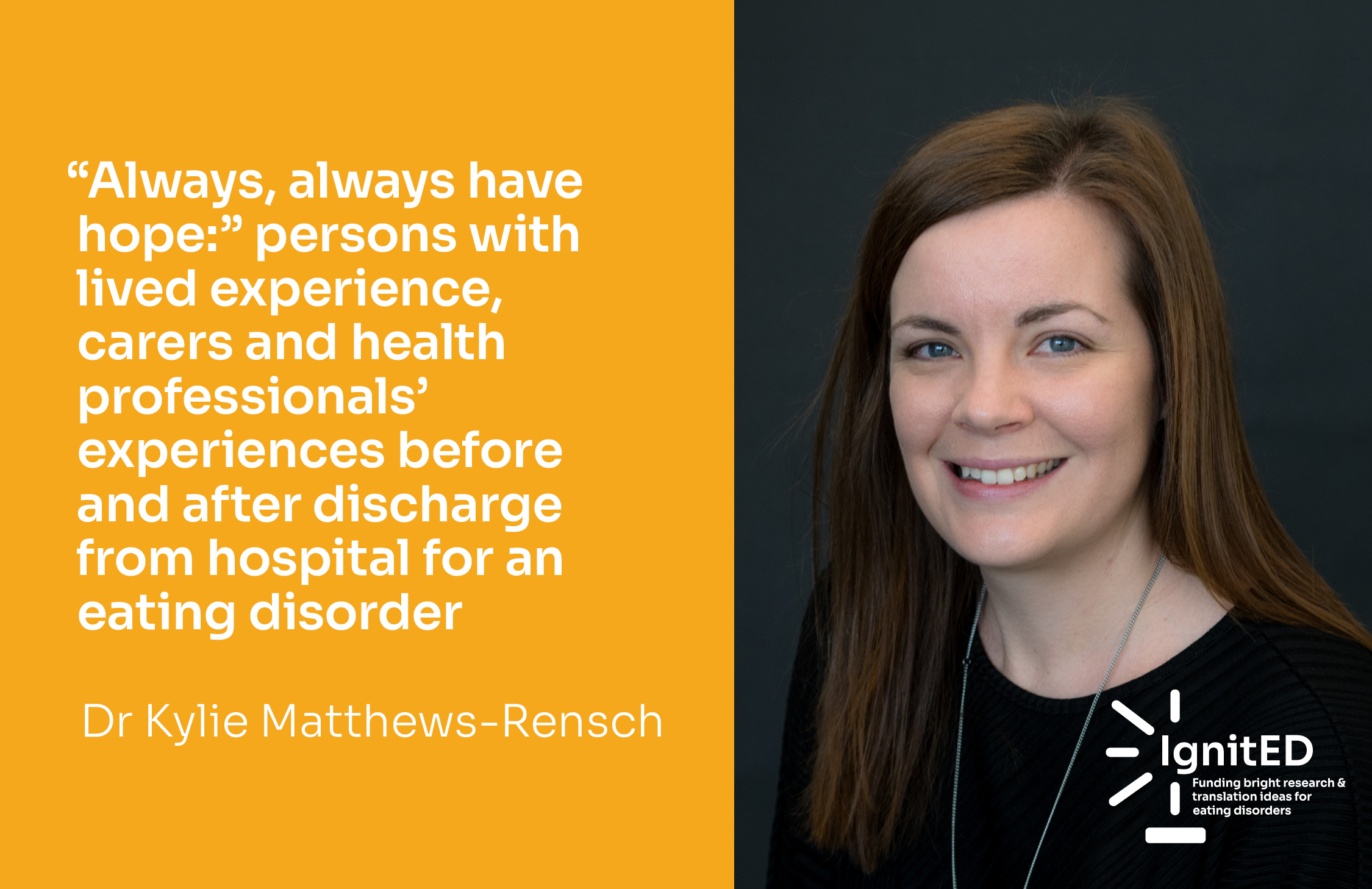
Using mixed-methods approach, grounded in experience-based co-design principles and processes, this research brought together the perspectives of people with lived experience, carers, and health professionals to better understand this often vulnerable stage of recovery.
The findings highlight the significant gap in care many adults face when transitioning from inpatient eating disorder treatment back into the community. Discharge from hospital is often marked by poor continuity of care, limited outpatient support options, and inequitable access to services.
Participants described how inpatient treatment can feel both hopeful and challenging, yet may not always adequately prepare individuals for the realities of returning home.
From these insights, clear priorities for improving post‑discharge outcomes have emerged. These include:
More individualised and compassionate care,
The findings of this paper reinforce an urgent need for system‑level change—ensuring that people leaving inpatient care are supported not just to stabilise, but to sustain recovery with dignity, connection, and hope.
AEDRTC extends our congratulations to Dr Kylie Matthews-Rensch for her important contribution to the eating disorder research landscape. It is yet another example of how the IgnitED program fosters new ideas and emerging research that can positively impact the lives, wellbeing, and recovery journeys of people with eating disorders and those who support them.
Full Citation:
Matthews‑Rensch, K., Elwyn, R., Jones, L., & Young, A. (2026). “Always, always have hope”: persons with lived experience, carers and health professionals’ experiences before and after discharge from hospital for an eating disorder. Journal of Eating Disorders. https://doi.org/10.1186/s40337-026-01621-x