24 April 2026
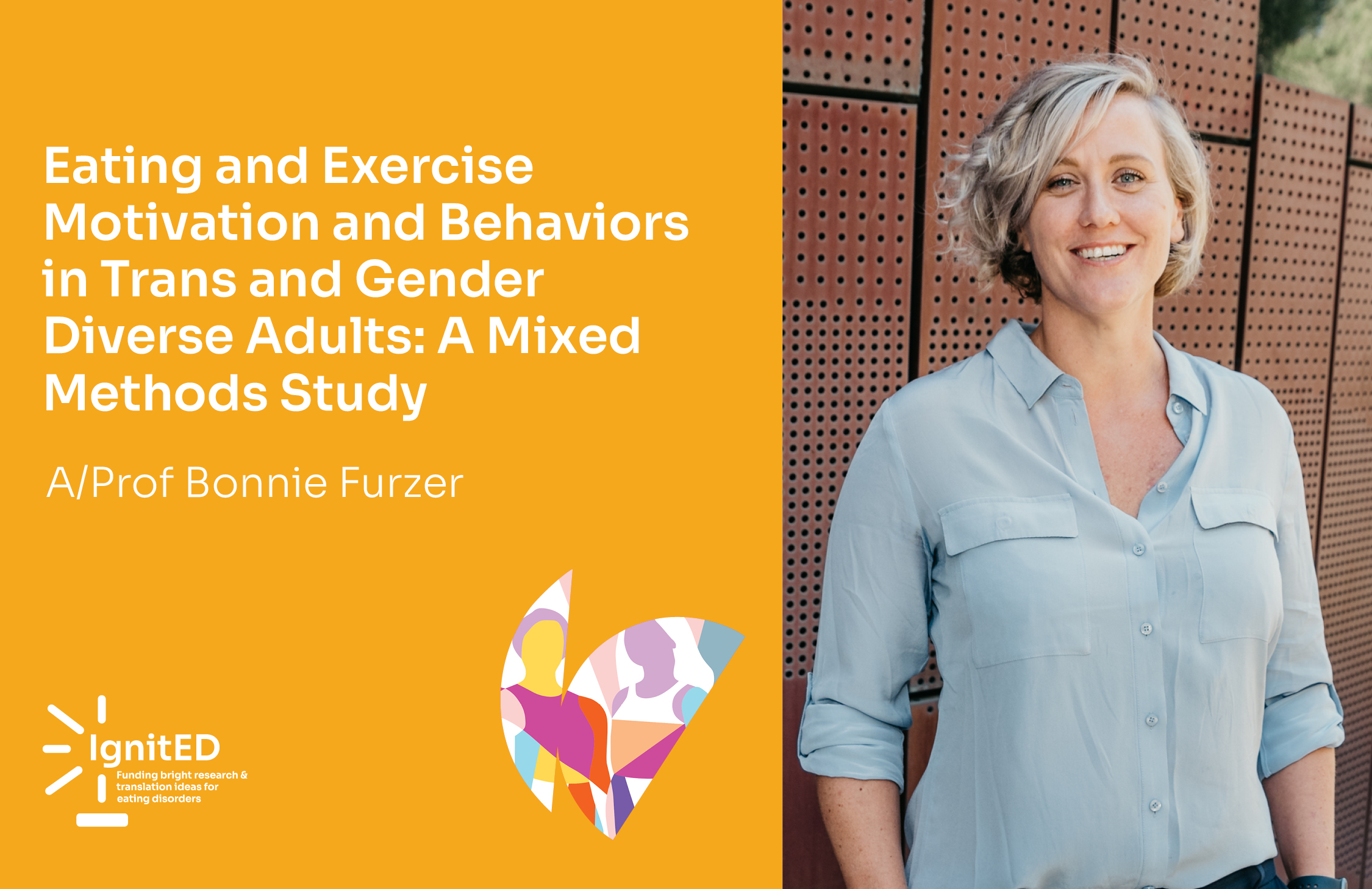
The paper, ‘Eating and Exercise Motivation and Behaviors in Trans and Gender Diverse Adults: A Mixed Methods Study’, makes a significant contribution to the evidence informing eating disorder prevention, assessment, and care for trans and gender diverse communities.
This study is the final publication arising from the IgnitED grant awarded by AEDRTC, reflecting the valuable role the scheme plays in enabling community‑informed research that addresses key gaps in eating disorder knowledge and practice.
Co-led by Kai Schweizer, this study was a collaborative effort involving teams across The University of Western Australia, Telethon Kids Institute, UNSW Medicine & Health, Edith Cowan University, and Thriving in Motion.
Using a mixed methods approach, the study sought to better understand eating and exercise motivations and behaviours among trans and gender diverse adults and is among the first studies to combine the Compulsive Exercise Test and Self-Determination Theory to understand these behaviours in trans adults.
Key Findings:
→ 37.3% reported a lifetime eating disorder diagnosis
→ 32.3% scored above the clinical cut-off for current ED symptoms
→ 15.2% met the threshold for compulsive exercise
→ 88% identified as neurodivergent, a critical intersectional finding.
(in 158 trans and gender diverse adult participants, with a mean age 22.8 years)
This study highlights the complex relationship between gender identity, eating, and exercise behaviours in trans and gender diverse adults, with these behaviours being influenced and motivated by several intersecting factors beyond just gender.
“Those with binary gender identities had higher odds of compulsive exercise, and compulsive exercisers showed very different motivational profiles, particularly higher introjected regulation (exercising out of guilt or to avoid negative feelings).”
— Bonnie Furzer
Emerging from this qualitative data were four interconnected themes:
→ Gender identity as a direct and indirect driver of behaviour
→ Environmental and safety barriers in exercise spaces
→ Vulnerability during puberty and gender transition
→ Pressure to conform to gendered body ideals
Why This Research Matters
These findings reinforce that there is no one‑size‑fits‑all approach to preventing and treating eating and exercise disorders in trans and gender diverse adults. This study points to the need for and importance of care that is individualised, gender‑affirming, and person-centred approach to care; one that takes social, environmental, and systemic factors into account — not just gender identity alone.
AEDRTC wants to congratulate A/Prof Bonnie Furzer’s leadership and contribution to this work, Kai Schweizer for his co-leadership, and the hard-working collaborators across academia, healthcare, and community organisations that made this research possible.
This publication exemplifies the aim of the IgnitED program: to catalyse high‑impact research that advances understanding, informs practice, and ultimately improves outcomes for people affected by eating disorders.
Full Citation:
Kai Schweizer, Marion Mundt, Felicity Austin, Brett Buist, Kemi Wright, Penelope Strauss, Ashleigh Lin, Ben Jackson, Kate Wilkinson and Bonnie Furzer. Eating and Exercise Motivation and Behaviors in Trans and Gender Diverse Adults: A Mixed Methods Study.
Online First Publication, April 2, 2026. https://psycnet.apa.org/fulltext/2027-49830-001.html