26 May 2026
In 2026, the theme “All In” is a powerful call to action. It reminds us that reconciliation is active, requiring each of us to step forward, take responsibility, and strengthening connections every day.
At its heart, reconciliation is about strengthening relationships between Aboriginal and Torres Strait Islander peoples and non-Indigenous peoples. (Reconciliation Australia)
It is also an ongoing journey, one that requires us to acknowledge past harms, listen deeply, and actively support a more equitable future.
For AEDRTC, reconciliation is central to our research. It shapes how we:
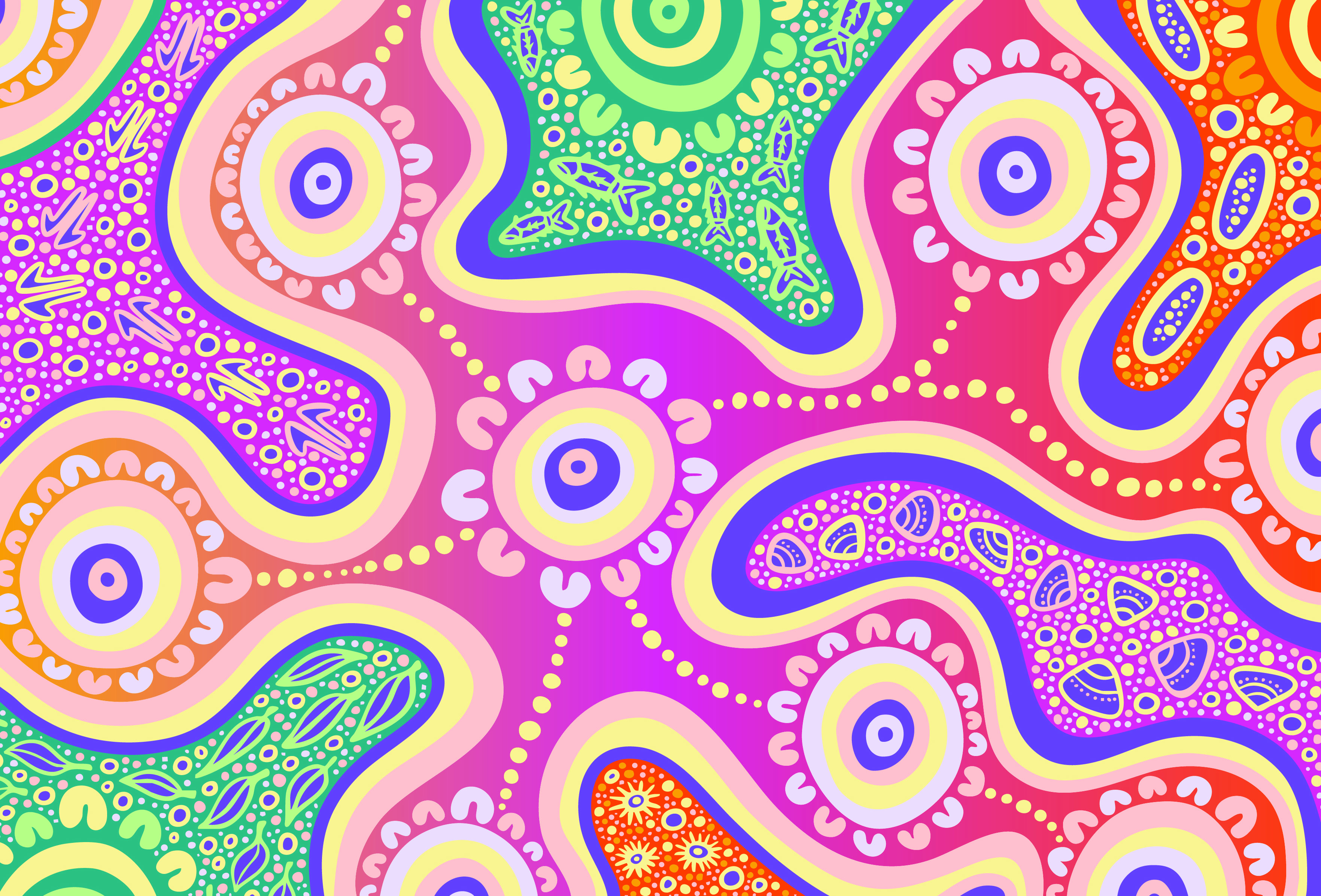
— 'TOGETHER', by Christine Slabb
The spirit of reconciliation can be seen in the story behind the digital artwork ‘TOGETHER’ by Bundjalung artist and graphic designer Christine Slabb. This artwork was designed for AEDRTC’s Aboriginal and Torres Strait Islander Research Stream, and contains design elements that represent Community, healing, and connection.
‘TOGETHER’
Food/body disconnection (eating disorder) doesn’t discriminate. You might be a saltwater or freshwater person. You might be from the city, the Islands or from the desert. This disconnection can affect anybody.
But TOGETHER with the right tools, the right people, and understanding the underlying issues. Together we can build strength, wellbeing and confidence.
It’s about honouring First Nations ways of knowing, being, and doing. This is what research and evaluation look like for First Nations people. It represents wisdom gathered in one place, knowledge sharing and living well.
Research has not always been good for First Nations peoples. This story is about collective wisdom and cultural governance, shared with non-Indigenous people.
While eating disorders affect people across all backgrounds, culture and context matter deeply in how healing happens. But the story speaks to a pathway towards this healing;
TOGETHER with the right tools, the right people and understanding the underlying issues. Together we can build strength, wellbeing and confidence.
Here, “together” reflects the spirit of reconciliation; a collective responsibility, meaningful actions informed by and in consultation with lived experiences, and walking alongside one another sharing knowledge.
A central message within ‘TOGETHER’ is the importance of Aboriginal and Torres Strait Islander knowledge systems in shaping research and care:
It’s about honouring First Nations ways of knowing, being, and doing. This is what research and evaluation look like for First Nations people.
This aligns closely with reconciliation in practice. It challenges traditional, often Western-centric approaches to research, and instead centres:
This is critical, particularly given the history of research in Australia:
Research has not always been good for First Nations peoples.
Reconciliation requires us to acknowledge this truth, and commit to doing better through meaningful sustained action.
Reflecting on the creation of ‘TOGETHER’, artist Christine Slabb describes the collaboration process as both meaningful and refreshing:
“Building from the AEDRTC story and creating a design that captures and reflects AEDRTC journey, I found the process meaningful and refreshing.
AEDRTC's colour palette of choice was a joy to work with. The colours reflect care and connection, which carries a sense of warmth. One of the AEDRTC taglines reads “It’s time we do things differently, together”, and this tagline spoke volumes to me from a First Nations perspective. Our healing has always come through connection, to each other, to our communities and the land. Working together is a collaboration, it’s respect and a shared understanding. This is the heart and centre of our people, the First Nations people. It’s time we do things differently, together.”
For AEDRTC, doing things differently means working in genuine partnership with Aboriginal and Torres Strait Islander communities. It means respecting that healing and knowledge are shaped through connection — to people, culture and Country — and ensuring this is reflected in how research is designed, governed and shared.
It is through this collective approach that new ways of working emerge; ones that honour culture, centre community, and create stronger, more meaningful outcomes.

Being “All In” is about embedding reconciliation into how we lead, partner, and create change; both in principle and in practice.
Our Aboriginal and Torres Strait Islander Eating Disorders Co-Production Program plays a central role in this commitment. Through Indigenous leadership and innovation, the program contributes to governance across the Centre and leads the development of an Aboriginal and Torres Strait Islander Eating Disorder Research Strategy, co-designed with community.
This work is grounded in a social justice imperative, one that centres:
These aren't abstract values; they guide how we engage, how we listen, and how we act.
Being “All In” also means ensuring that research is not done to or on behalf of communities, but with communities. The Co-Production Program works in close collaboration with Aboriginal and Torres Strait Islander peoples to shape research, translation, and impact, integrating with the Lived Experience Program to ensure that all activities are co-designed and directed towards closing the gap.
Strong governance is critical to this approach. All activities are guided by the Aboriginal and Torres Strait Islander Co-Production Governance Group, whose members bring diverse skills, cultural knowledge, and lived expertise. This ensures accountability, cultural integrity, and that decision-making remains community-informed.
At its core, being “All In” at AEDRTC means:
It is through this collective approach that we move beyond intention, and towards meaningful, sustained change.
‘TOGETHER’ is a reflection of what reconciliation can look like in action.
It reminds us that:
This National Reconciliation Week, we recommit to being “All In,” not just this week, but every day, as we continue to learn, listen and walk alongside Aboriginal and Torres Strait Islander peoples in our work.
Real change happens TOGETHER.
For more of Christine's work, visit her website.
Reconciliation Australia. “What Is Reconciliation?” Reconciliation Australia, 2024, www.reconciliation.org.au/reconciliation/what-is-reconciliation/.